Car Shows Are Not Just About Cars! The Auto Industry’s Aspirations for the Japan Mobility Show Mobility DX ushers in an era when “the value of automobiles is no longer limited to transportation”
- # Collaborative Partnership
- # Mobility DX
A “once-in-a-century transformation,” with SDVs emerging as a new axis as well
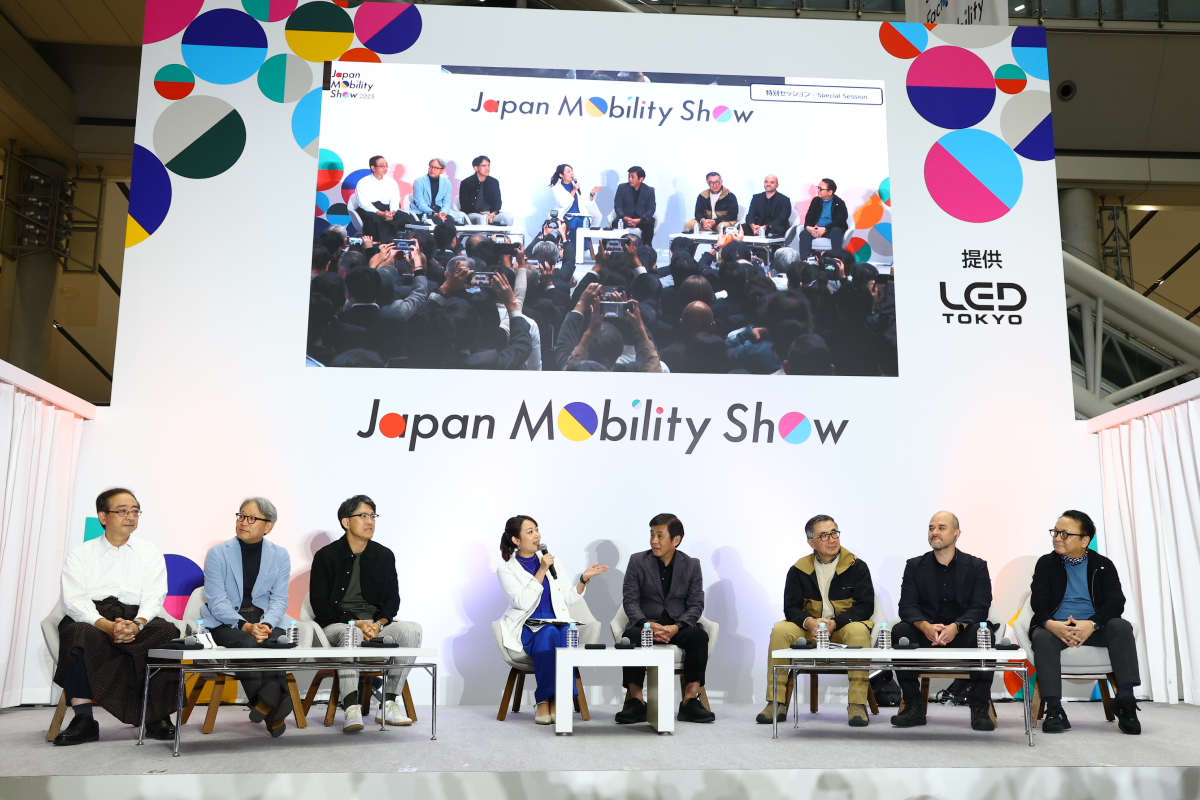
This year’s JMS adopted the concept, “Let’s go find an exciting future!” It conveys the idea that not only automakers but also companies from other industries—IT firms among them—and the general public will think together about what mobility should be and co-create the future. The number of participating companies reached a record 522, and attendance totaled 1.01 million—approaching the 1.11 million visitors recorded at the inaugural JMS in 2023.
“The automobile industry is entering a once-in-a-century transformation.” This phrase began appearing in mass media nearly 20 years ago, when signs of a full-scale EV rollout started to emerge. Toyota Motor Corp. Chairman Akio Toyoda, beginning around 2017 during his tenure as president, repeatedly used the phrase to underscore a sense of crisis. Nearly a decade has passed since then.
Yet what the phrase points to has shifted dramatically in the meantime. Although EV sales have plateaued in major markets, attention has now turned to the convergence of digital technologies—especially AI—and automobiles. This includes automated driving and SDVs (software-defined vehicles), in which functions are updated in response to user needs. This is an area the automotive industry cannot address on its own; it has become an era in which understanding the needs of users who now have diverse choices—and collaborating with companies in other sectors, including IT—is indispensable. Masami Tanaka, head of the Next-Generation Mobility domain at JAMA, said with the JMS concept in mind, “The value automobiles provide is no longer limited to transportation. By having all stakeholders think together, we want this to be an opportunity to create new services, new expectations for mobility, and new value for everyday life.
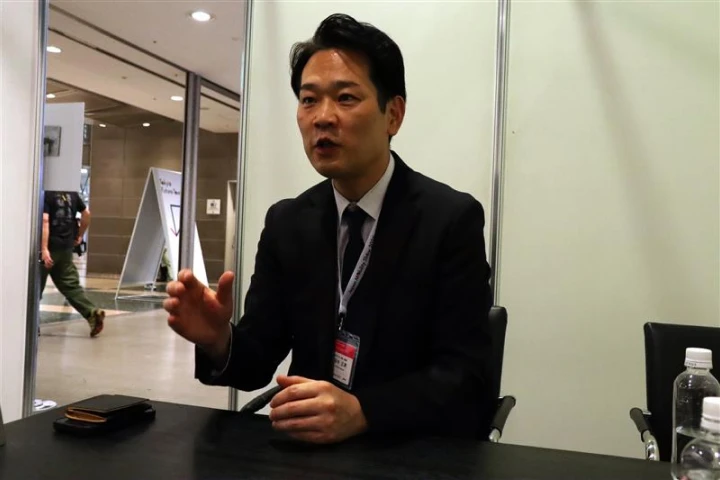
In fact, this year’s JMS made that point unmistakably clear. The show was structured around three programs: “Future,” which presents a near-future society in which mobility is embedded; “Culture,” which re-recognizes the value and culture mobility brings; and “Creation,” which encourages collaboration with a wide range of industries, including startups. The highlight of “Future” was “Tokyo Future Tour 2035,” which let visitors experience—through various exhibits—the changes mobility may bring by 2035. Exhibits included not only mobility concepts such as “flying cars,” but also future communications infrastructure presented by mobile carriers. The program also incorporated content that made visitors feel the near future surrounding our lives, such as how urban movement may change and how society might coexist with nature. Tanaka said, “We proposed a world that makes it easier for visitors to make the next-generation mobility society their own—by prompting realistic thinking like, ‘If it were me, I’d build mobility this way, and use it this way.’”
Startups showcase technology, planting seeds for industry advancement
Japan’s automotive industry, a core national industry, is facing pressure globally from U.S. and Chinese players that have commercialized inexpensive EVs and automated driving that leverages end-to-end (E2E) approaches in which AI autonomously judges situations. As JMS made clear, JAMA is engaging in dialogue with other industries—including the digital innovation mega-show CEATEC—to explore new carmaking that transcends the traditional boundaries of the industry.
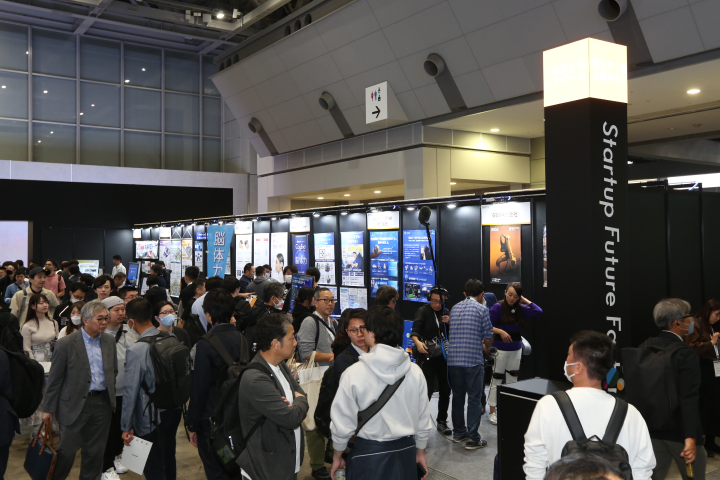
A centerpiece illustrating the shift from TMS to JMS is “Creation,” one of the three pillars. With the arrival of the SDV era in view—and driven by a sense of crisis that “without incorporating the flexible ideas of startups, we cannot beat Europe and the United States” (Tanaka)—a dedicated area was established to introduce “seeds” of next-generation technologies, regardless of company size or whether they come from within the existing automotive industry. In “Exhibition Street,” where booths were clustered, a total of 129 companies including startups participated, and visitors showed strong interest in innovative services such as automated logistics roads powered by linear motors and barrier-free solutions using robots.
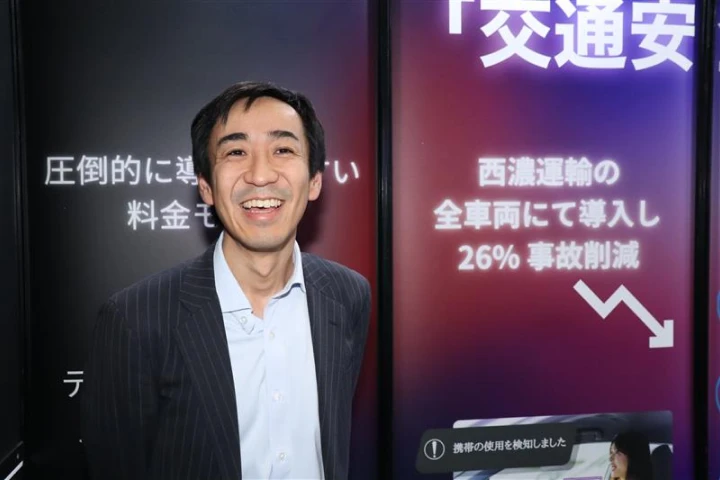
One participating startup, Ttis, is developing “add-on AI for dashcams.” Using dashcams installed on trucks and other vehicles, cloud-based AI evaluates thousands to tens of thousands of risky driving behaviors captured and presented to drivers. For logistics companies, this improves the efficiency of safety management, including optimal staffing and guidance. As one example of addressing corporate pain points, a major logistics company that installed the system in more than 10,000 transport vehicles reportedly reduced accidents by 26% and cut annual labor costs for safety management by about ¥200 million. CEO Hiroshi Takato emphasized, “For startups, I believe we need a framework for collaboration with other companies where our technology can be put to use.”
Accelerating cross-industry business matching beyond traditional industry boundaries
JMS, like its predecessor TMS, has been held once every two years. However, the world of mobility DX—automated driving among its domains—has been changing at a rapid pace, much like other digital industries. If Japan cannot respond quickly, it risks losing competitiveness. Against this backdrop, a related JMS event held in 2024 to sustain momentum for revitalizing the automotive industry was “Bizweek.” As part of an initiative to accelerate collaboration between startups and the automotive industry, 145 startup companies and 58 business operators exhibited. While JMS targets the general public, Bizweek focuses on business matching, and negotiations among representatives were lively in the central meeting area. JAMA also set up “Meet-up Box,” a business-matching platform that can be used continuously after the event ends, generating co-creation beyond industry boundaries. Registrations have exceeded 2,000, and approximately 900 business meetings have been conducted cumulatively.
Tanaka explained Bizweek as follows: “It was decided after someone in JAMA’s board of directors said, ‘We, too, were originally a startup.’ By combining the experience, talent, and global networks of large companies with the novel ideas of startups, we aim to revitalize not only the automotive industry but also the Japanese economy.” JMS is no longer just a biennial festival; it is increasingly taking on the role of a “hub” that accelerates co-creation regardless of industry or company size.
Related Articles

Other contents