Developing Software Talent for the SDV Era, Including Collaboration with Other Industries Focusing on training that builds expertise in both vehicles and software
- # Human Resource Development
- # Mobility DX
Junsuke Ino, Expert Leader, Software Development Department, Software-Defined Vehicle Development Division, Nissan Motor Co., Ltd.
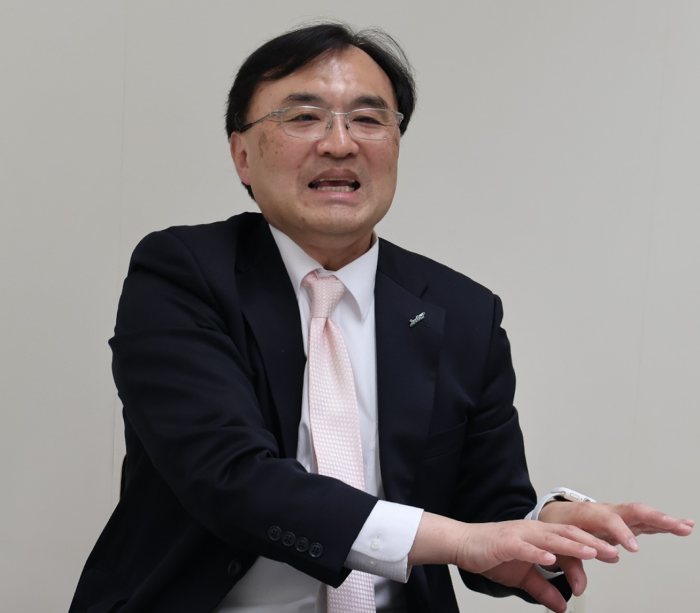
We established the Nissan Software Training Center in Atsugi, Kanagawa Prefecture, in 2017. Its ultimate objective is to cultivate “hybrid” talent with skills in both software and automotive engineering, something that is especially important in the SDV era. Existing engineers with strong automotive knowledge thoroughly study software development fundamentals and programming, while software professionals, including mid-career hires, intensively learn vehicle control and in-vehicle software design. Each group undergoes 480 hours of training, including classroom instruction. By advancing these two poles simultaneously, we aim to produce world-class engineers.
About 10 years ago, our software teams were effectively subordinate to component development. However, as software rapidly became more important in enhancing vehicle value, we created an independent division responsible for production software. In that process, another issue emerged: the need to build the ability to apply software knowledge and skills—in other words, software literacy. The Nissan Software Training Center was established to put that into practice.
TCS of India Helped Build the Program
In operating the Nissan Software Training Center, we recognized that there were limits to what could be handled within Nissan alone, so we sought support from outside companies in various ways. We consulted Tata Consultancy Services (TCS), our partner company in India and part of the Tata Group, which includes major IT and automotive businesses, about designing the program. They invited us to come and see what they were doing, so we visited their site.
What we saw was tremendously inspiring. There were many trainees, and the place was full of energy. Above all, no one was asleep. Everyone was completely serious, and they seemed to understand that the engineering skills gained there would help elevate their future careers. The classes were also thoughtfully designed, placing emphasis on interactivity rather than one-way lectures. We found it extremely instructive, and TCS helped us with program development and other areas, laying the foundation for the Nissan Software Training Center. It was also important to create a framework in which knowledge could be put to practical use. For that reason, we prepared a large number of radio-controlled model cars and development tools for verifying whether the software students created would actually work in practice. I feel strongly that cooperation from industries beyond automotive is important in developing software talent.
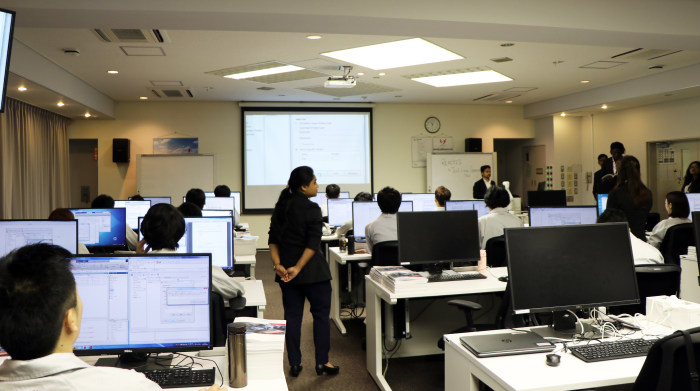
In addition, in order for trainees to gain a full understanding of what happens in each development division, we made sure they would experience the entire process in one continuous flow, from specification design through vehicle evaluation. It has been some time since we built the original program, but technological innovation advances day by day, and training content quickly becomes outdated. We therefore review and add to the program almost every year to keep pace with the latest needs.
“Let’s Build the Future Together” in the SDV Era of Unlimited Possibility
People who already have automotive knowledge and can contribute immediately are being fought over within the industry, and the limited pool of talent is simply circulating within the sector. Securing the software talent needed in the SDV era will be difficult for Nissan alone. Here too, collaboration with other industries, including IT, will be necessary, along with more opportunities to make people aware of Nissan’s initiatives, including the Nissan Software Training Center.
I also believe we have not done enough to show students that they can apply their skills in the automotive industry. Compared with the IT sector, the number of applicants from information-related departments for our recruitment exams is overwhelmingly small. Against that backdrop, I want to send a message to students and software professionals in other industries: “Let’s build the future together.” In the SDV era, vehicles will continue evolving like smartphones. And as is often said, a single vehicle consists of as many as 30,000 parts, meaning the range of technologies involved is extraordinarily broad. I believe one of the great attractions of this field is that it allows people to take on the challenge of something physical—a real car—through digital technology.
Masayuki Yokoyama, General Manager, Toyota Software Academy, Toyota Motor Corporation
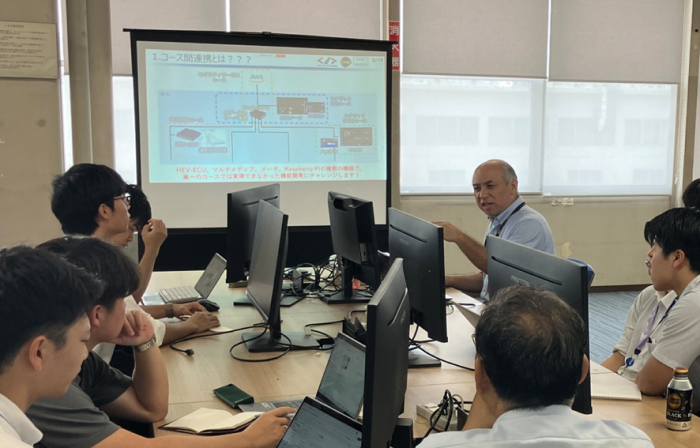
As the automotive industry enters what is often called a once-in-a-century period of profound transformation, including the arrival of the SDV era, the value of software installed in vehicles is rising to an unprecedented level. At the same time, we must integrate IT technologies into the control systems at the core of automobiles—machines that are large, heavy, and fast, and whose operation directly affects driving safety. To cultivate dual-skilled personnel with expertise in both software and hardware—that is, people with the qualities of true automotive engineers—we established the Toyota Software Academy in May 2025. We offer courses designed to create synergy by helping software talent learn about cars, while enabling automotive engineers in areas such as embedded systems to learn IT.
This is being pursued not only by Toyota Motor itself, but also through collaboration among group companies including Aisin, Denso, Toyota Tsusho, and Woven by Toyota. Toyota Motor has test vehicles, test courses, and automotive development know-how, but it cannot create a comprehensive curriculum on its own. By drawing fully on the expertise of each company—including Aisin and Denso, which have strengths in automotive computers and related areas—we are complementing one another where needed.
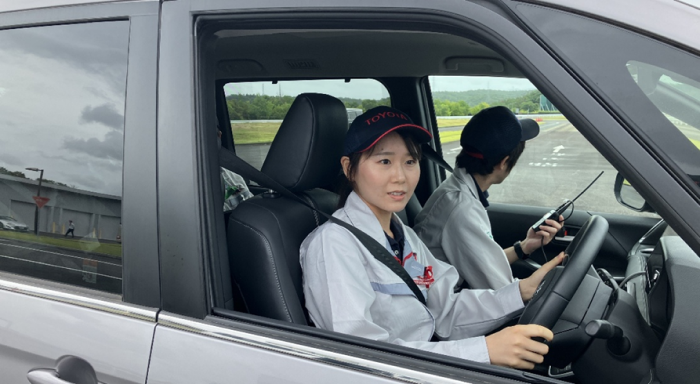
At the Toyota Software Academy, we place great importance on genchi genbutsu—Toyota’s philosophy of going to the actual place, understanding the actual facts, and improving production sites, products, and services. The academy covers six areas of learning: business design, cybersecurity, AI and data science, embedded software, cloud software, and digital production. As a first step in talent development for embedded software, we launched the Toyota R&D Software Boot Camp. The program lasts three months, beginning with one month of classroom instruction in fundamental knowledge. Then, as part of the genchi genbutsu experience, participants spend the next two months engaged in practical simulation: developing software themselves, installing it in a test vehicle, and seeing whether it can actually run properly. In this way, we can cultivate personnel who understand both software and vehicles, and connect that training to practical application in real development.
How to Successfully Blend the “Interface” With Other Industries
That said, we do not believe the automotive industry alone can fully respond to the SDV era. In fields where deeper expertise is required—such as cloud computing, cybersecurity, and communications—we are also considering the use of training programs that have already been developed by other industries.
For example, in AI, which is expected to be used in autonomous driving, we hold workshops separate from the Toyota R&D Software Boot Camp, working in cooperation with affiliated companies in order to incorporate the latest information, which changes day by day. In other SDV-related fields as well, there are a wide range of services to be provided, including cybersecurity and entertainment. To move these forward smoothly, success will depend on how well we can blend the “interface” between the domains we have cultivated and those of other industries, while ensuring safety and reliability requirements are met. We want to expand collaboration beyond industry boundaries not only in classroom-based courses, but also in practical simulation fields tied to safety and security, such as those implemented in the Toyota R&D Software Boot Camp.
Providing Attractive Mobility Experiences Through IT Technology
We want to show students—the “eggs,” so to speak, of future software talent—that IT knowledge can also be put to use in the automotive industry. In the SDV era, there will be even more opportunities to apply IT expertise, and the stage on which people can excel will only expand. The greatest appeal of automotive development is the tangible excitement of seeing a real object—a car—actually move. Through software they themselves have created, engineers can make large, heavy, fast vehicles operate safely, while also generating the appeal of SDVs as something more than mere means of transportation. If that message can be conveyed, the automotive industry will become a highly attractive career option.
In that sense, the Toyota Software Academy itself—where participants can install software in test vehicles and verify whether it actually runs—can also serve as a powerful means of outreach. One of the academy’s goals is to increase the number of software professionals who are interested in the automotive industry, and in the future we hope it will also contribute to broadening the talent base.
Related Articles
-
- # Collaborative Partnership
- # Mobility DX
2026.03.31
-
- # Human Resource Development
- # Mobility DX
2026.03.31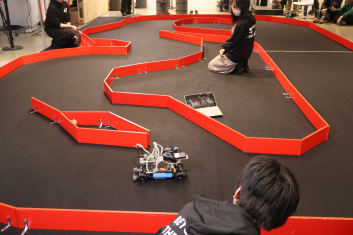
-
- # Human Resource Development
- # Mobility DX
2026.03.05